The Last Landing
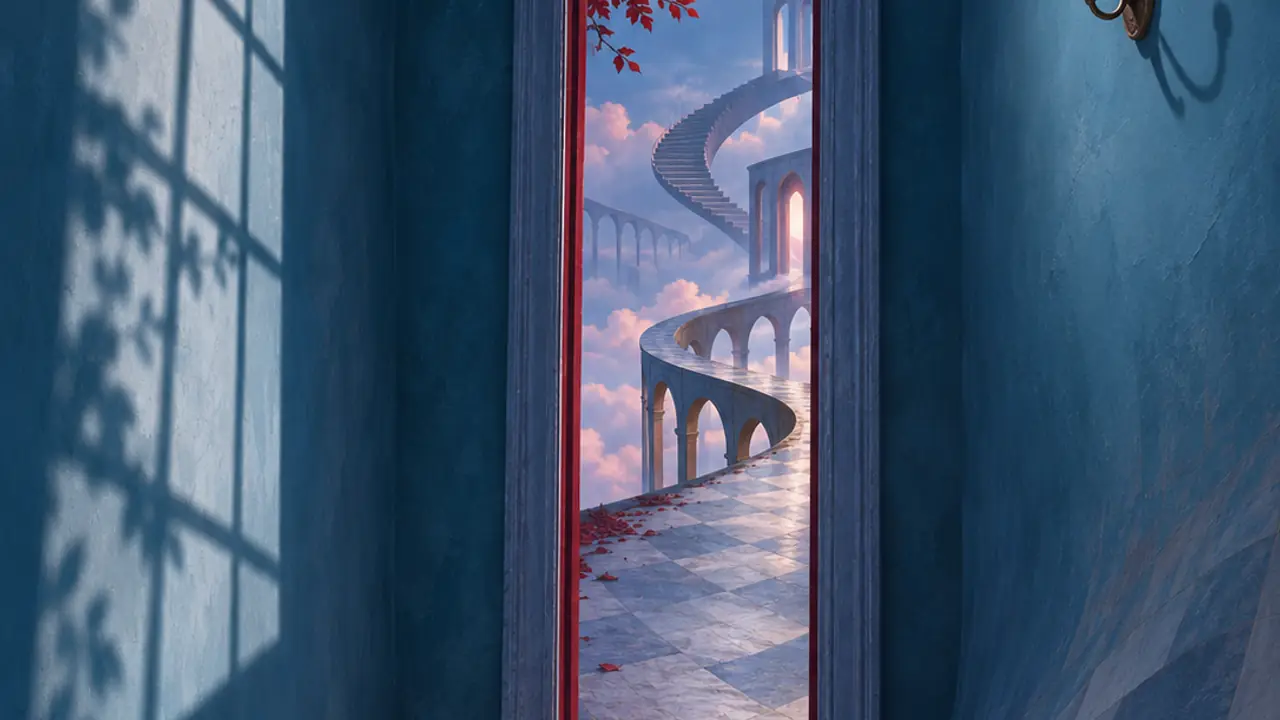
The Last Landing begins halfway up a stair that seems to finish against a wall. The dreamer can still see the frame of an old window above the upper step. Viewed from below, its reflection sits across the dark floor as if the room were flat. After moving around a corner the reflection changes and a new surface becomes possible to reach. The puzzle begins when the dreamer tries to work out which feature stayed in place.
Keep the real window as a reference
The low view shows the actual frame near a small piece of pale wall. Its reflected outline reaches down the first flight. When the dreamer turns toward the other side, the reflected shape rises along the wall. The frame itself retains the old angle. The player can use the bottom edge of it to compare where the new landing appears while keeping the earlier stair visible at the edge of the view.
The loop is to identify a surface, change the viewing position and try a short move where two sets of clues agree. If the dreamer leans too far past the turn, their earlier staircase still has a place to pause while they look back. Another side of the landing can support a step once its edge separates from the wall. The game asks the explorer to find that distinction before asking for a longer crossing.
Hold one shape through the change in gravity
Muted blue surfaces describe the stair and pale metal frames divide the old windows. One dull red strip stays on the same beam while the geometry moves around it. The art keeps the beginning of the change visible in that relation. A flattened image of the window appears farther from the real one as the point of view changes. The dreamer can check the difference even when the view no longer looks like an ordinary room.
Quiet footsteps become a shorter scrape near the new platform. The room always has a visual place to put a foot. At the turn one line in the molding points back to the stable rail. This feature helps a player regain the way back if they move onto the new surface and see that the next exit is not yet reachable.
Use the landing as a place to stop
Once the dreamer stands on the narrow platform, a door can appear above the staircase behind them. They can revisit the view from either side without losing the last place that supported a step. Making the platform a place to inspect the next part gives the player a reason to keep the position after finding it. The wider room can shift around one useful feature.
The Last Landing is in prototype development. The current scene tests the first viewpoint shift and the return to the old stair. A Corner for Gravity records the separate effects of stepping and looking. The Window Stays describes the frame that persists. Use the viewpoint entry to compare this puzzle with the drawer case.